Azure DevOps Pipeline Templates
Standardized Azure DevOps delivery workflows by converting classic pipelines to YAML and building a versioned shared template repository teams could adopt safely.
Problem
Our Azure DevOps setup had become inconsistent over time. Many pipelines were still defined through classic UI flows, which made them harder to review, standardize, and reuse across teams. More advanced delivery steps were frequently rebuilt from scratch, slowing onboarding and causing behavior drift.
Approach
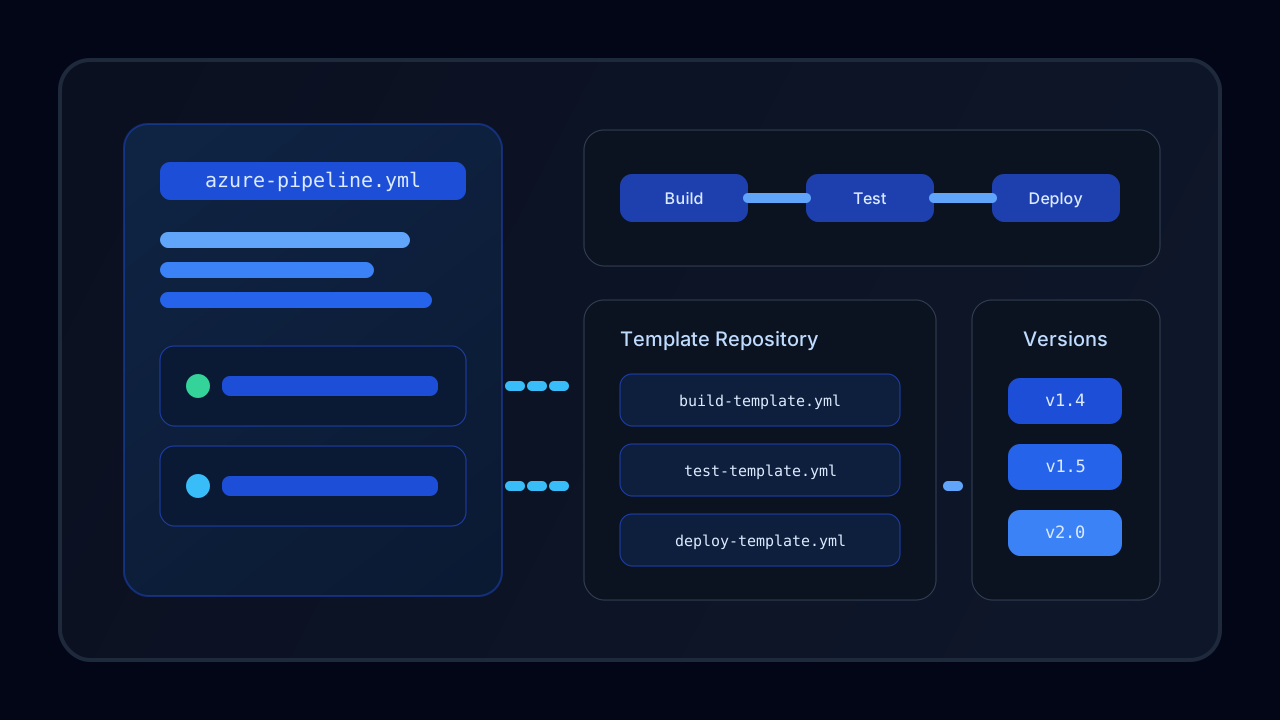
I converted classic pipelines into YAML so they could be versioned and reviewed like code. The bigger gain came from moving beyond one-off migrations: I built a dedicated template repository that teams could reference directly for common build, test, packaging, and deployment patterns. This centralized repeated logic, removed copy-paste drift, and let improvements ship once across many consumers.
Architecture
The shared repository was structured around reusable YAML templates that teams imported into their own pipelines. I versioned templates with semantic versioning and published tags that downstream pipelines referenced explicitly. That created a stable contract between template authors and consuming teams: improvements could ship continuously, while breaking changes landed in new versions without surprising existing builds. The result was a lightweight internal CI/CD platform instead of disconnected pipeline files.
Tradeoffs
Centralizing pipeline logic improves consistency, but it creates a shared dependency teams need to trust. The versioned-tag model balanced this: teams adopted shared templates without giving up control over upgrade timing, and I could evolve templates without surprise regressions. The tradeoff was stricter discipline around versioning and compatibility, which was still far cheaper than each team maintaining fragile pipeline logic independently.
Outcome
The pipeline work unified how delivery workflows were defined, reduced time to stand up complex pipelines, and made common tasks easier to maintain across teams. More importantly, it shifted pipelines from ad hoc configuration to a reusable engineering asset: versioned, reviewable, and safe to evolve over time.