.NET Framework to .NET 8 Upgrade
Led a business-critical application upgrade from .NET Framework 4.6 to .NET 8, resolving breaking runtime and dependency issues without disrupting core workflows.
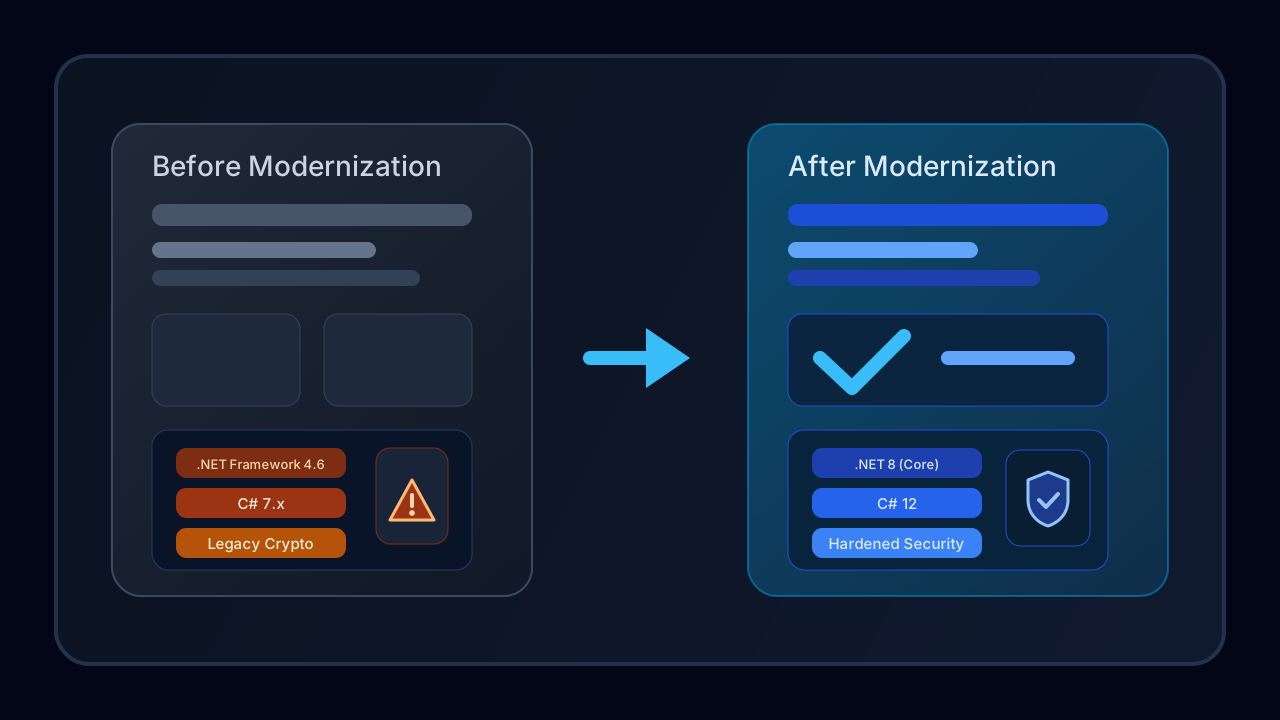
Problem
The application was still central to operations, but it was running on .NET Framework 4.6 with brittle library assumptions, aging dependencies, and encryption code that had become obsolete. The risk was not just technical debt. Staying in place increased maintenance friction, narrowed future upgrade paths, and left security-sensitive areas on a stack that was increasingly difficult to justify.
Approach
I treated migration as discovery plus risk management, not a blind version jump. I audited dependencies, mapped likely break points, and split work into direct upgrades versus replacement tracks. I then replaced obsolete crypto usage with supported APIs and resolved runtime, package, and API-level breakages as the app moved to .NET 8. Each phase closed with workflow-level validation before broad rollout.
Architecture
The architecture work focused on reducing fragility while preserving known behavior under a new runtime. I modernized target frameworks, dependency boundaries, and security-sensitive paths while keeping business workflows stable. Where legacy components could not move forward cleanly, I isolated or replaced them behind safer boundaries so the application could continue evolving on supported foundations.
Tradeoffs
A rewrite would have created unnecessary delivery risk for a system users already depended on, but a shallow version bump would not fix core issues. The balance was aggressive modernization where the stack was unsafe or unsupported, while preserving enough continuity that users could trust existing behavior. That required deliberate choices about what to preserve, what to replace, and where temporary complexity was acceptable to reach a sustainable platform.
Outcome
The result was a legacy application moved onto .NET 8 with stronger security, fewer unsupported dependencies, and a healthier maintenance path. The team shifted from repeatedly working around legacy blockers to delivering changes on a supported platform with lower upgrade risk.